Accessible remodeling is the practical side of aging in place. The goal is a bathroom that stays usable if balance, strength or mobility change, without looking like a clinic. Call the number on this page to be connected with a local bathroom remodeler in Hudson.
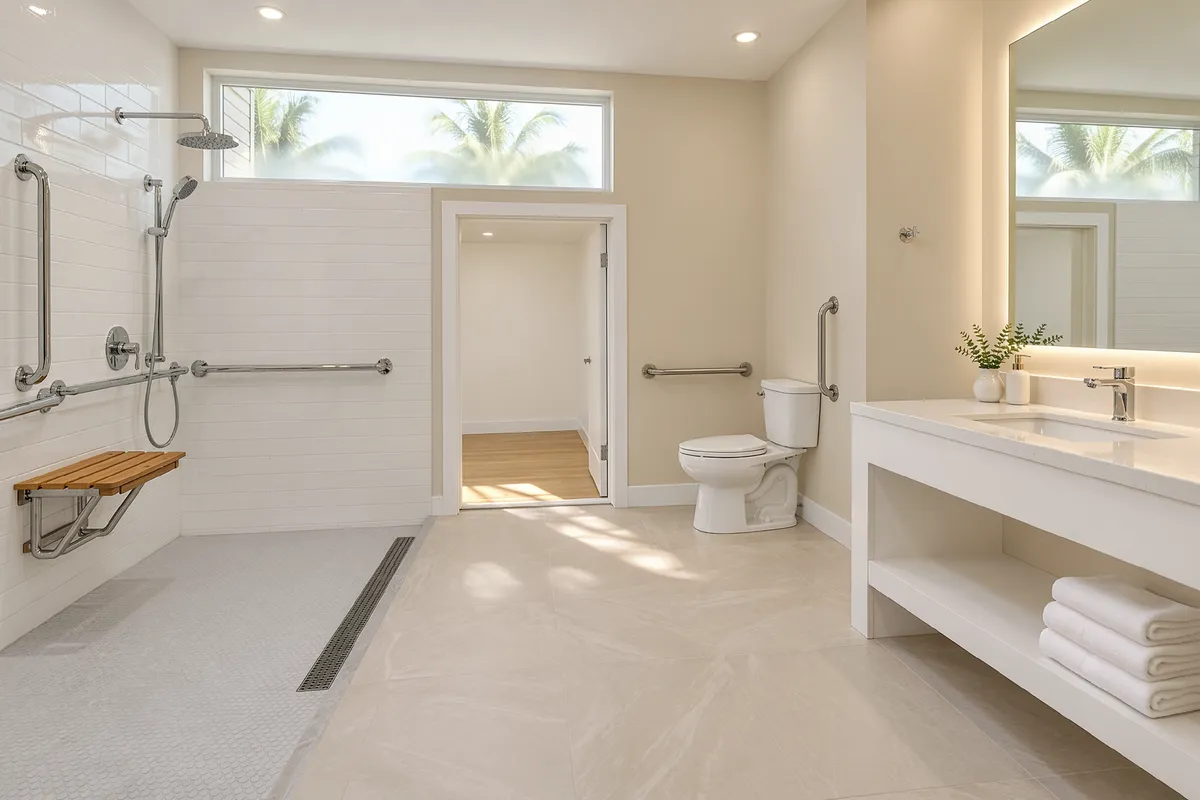
What the work usually covers
- Widening or re-hanging the bathroom door
- Replacing a tub with a low-threshold or roll-in shower
- Setting a taller toilet
- Adding solid blocking for grab bars
- Switching to lever handles and brighter lighting
Most homes need only some of these changes, and a remodeler can tell you which ones fit.
Style without the clinical look
Accessible does not have to look institutional. Large-format tile, a frameless shower entry, decorative grab bars and a furniture-style vanity can all meet the practical needs. Ask the remodeler for examples where the safety features blend into the design, so the bathroom still feels like part of the house.
Much of the housing here dates to the 1980s, when bathrooms were small and doors narrow. Expect tight layouts, old drains and possible hidden water damage that shape how wide a shower or doorway can go.
Near the water, humidity and salt air are hard on fixtures and fans, so corrosion-resistant hardware and strong ventilation matter in an accessible bathroom, and flood-zone rules can affect larger projects.
Where planning saves money
Decisions made on paper cost almost nothing, while changes after demolition cost a lot. Settle on shower size, seat location and bar positions before walls come down. Fewer revisions mean fewer return trips by the plumber, tile setter and drywall crew, which keeps the project steadier.
Living at home during the job
Plan for days without a working bathroom. Ask the remodeler how long the shower and toilet will be out, whether a portable toilet or a temporary setup is needed, and how dust will be kept out of other rooms. This matters most if the person who uses the room has limited mobility.
Get the details in writing
A solid agreement lists shower type, door width, toilet model, grab bar locations, tile and fixtures, plus who pulls permits and how changes are handled. Vague wording about accessibility features can turn into disputes later. Ask the remodeler to describe each feature specifically, with measurements where possible.
Permits and paperwork in Hudson
Because Hudson has no city government of its own, permits for remodel work come from Pasco County Building Construction.
Permit questions can go to Pasco County Building Construction at 727-847-8126.
If a remodeler asks you to pull the permit as an owner-builder, slow down: that makes you legally responsible for the work. Most homeowners let the contractor pull it.
About flood zones: County inspectors review substantial improvement and damage in flood hazard areas; repair or improvement cost reaching 49% of the structure's actual cash value (land excluded) triggers flood-standard compliance.
For an older house, EPA advises having an asbestos professional inspect materials the remodel will disturb, and never sanding or scraping old flooring or its backing first.
Note how old the house is and whether the bathroom has had leaks. Hidden water damage is the most common surprise once tile comes off.
Remodelers that take calls here usually also work in Spring Hill, Port Richey and New Port Richey.
Accessible Bathroom Remodel questions in Hudson
What makes a bathroom accessible?
Is a wider doorway always necessary?
Can I stage the work over time?
Does an accessible bathroom need a permit?
More bathroom remodeling services in Hudson
Accessible Bathroom Remodel nearby
Helpful guides
Sources
- Pasco County Building Construction Services
- Pasco County Building Construction Services: floodplain rules
- Florida DBPR: verify a license
- Florida Statutes s. 713.13: notice of commencement
- FEMA: substantial improvement / substantial damage
- EPA: lead renovation, repair and painting rule
- Hudson housing by year built
Last updated: